EREA Consulting Group
The final stretch between the distribution center and the consumer’s doorstep is no longer a logistical problem but has become the real moment of truth
It used to be treated as an operational detail—the final step before the product reached the customer. Today, it is the battlefield where loyalties are built or destroyed, where a brand’s reputation can collapse in hours, and where the difference between a returning customer and one who leaves forever is measured in minutes and in the quality of an experience that no one sees from the boardroom.
Global retail understood this and reoriented investments, structures, and business models around this link. Latin America is moving in the same direction, but with its own restrictions and with solutions that in some cases surpass in creativity what mature markets developed with much more capital.
Immediacy as the new standard: fast is no longer enough
Twenty-four-hour delivery, which a decade ago was considered exceptional, is now the minimum acceptable threshold for a growing number of urban consumers. The pressure does not come only from Amazon or Mercado Libre: it comes from consumers themselves, who have learned that immediacy is possible and are no longer willing to settle for less.
The response from large operators was structural: to bring inventory brutally close to the customer. Urban microhubs, dark stores strategically located in neighborhoods with the highest order density, proximity warehouses that allow for delivery in one or two hours. Traditional logistics—centralized, hierarchical, designed for economies of scale—has given way to hyperlocal networks that transform the city into a chessboard where every move is measured in minutes.
For retailers that do not have the scale of large operators, the answer lies in partnerships. Startups specializing in last-mile delivery, collaborative delivery platforms, agreements with local businesses that function as dispatch points. The question is no longer whether to deliver quickly, but how close to the customer the inventory can be positioned—and with which partners.
Sustainability in delivery: from differentiator to entry requirement
The pressure on the carbon footprint of each delivery is real and growing on multiple fronts: governments regulating access by combustion vehicles to urban areas, consumers evaluating the environmental impact of their purchasing decisions, and investors incorporating sustainability metrics into their analyses. Retailers who ignore this movement are not being conservative; they are accumulating a risk that will sooner or later materialize.
The operational response includes electric and non-motorized cargo fleets for short distances, smart routes that group deliveries and minimize empty miles, and Out Of Home models—lockers, pickup points at convenience stores—that eliminate failed delivery attempts: one of the most costly and unnecessary sources of emissions in urban logistics.
Europe leads the way with zones where only zero-emission vehicles are allowed to circulate. Latin America is experimenting with pilot projects that are still in their infancy but point to a direction of no return. Green logistics is no longer a marketing argument but has become the price of entry into the market of the future.
Nearshoring: geography as a competitive advantage
The pandemic and geopolitical tensions in recent years have exposed the fragility of global supply chains with a clarity that no risk model had fully anticipated. The response was to bring production and storage closer to consumer markets: nearshoring is no longer a tactical option but a structural reconfiguration of international trade.
For Latin America, this trend represents a concrete opportunity. Mexico, Brazil, and Colombia benefit from the relocation of regional distribution centers, with shorter response times, less exposure to remote disruptions, and more predictable logistics costs. For retail, nearshoring means being able to compete on speed without relying on transoceanic shipments that can be paralyzed by any crisis on another continent.
The last mile is where retail delivers on its promise to the customer. Everything that happens before—the strategy, the assortment, the price, the in-store or website experience—is validated or destroyed in those final kilometers.
Artificial intelligence: the invisible engine behind every delivery
Behind every package that arrives on time are algorithms working in real time: route optimization considering traffic, weather, and delivery windows; predictive models that anticipate demand and pre-position inventory before the order exists; systems that detect failed delivery patterns and automatically adjust operating parameters.
Visibility has also changed. Tracking systems that offer minute-by-minute information are not a luxury: they are the basic expectation of a consumer who no longer accepts uncertainty about where their order is. Chatbots that manage returns and complaints without human intervention reduce costs and respond when the customer needs them, not when the operation can attend to them.
Retailers that do not develop these analytical capabilities—either on their own or through partnerships with specialized operators—will make decisions with incomplete information in a market where speed of reaction determines profitability.
Emerging models: from the lab to the operation
Drones and autonomous delivery vehicles, which five years ago seemed like laboratory experiments, are now operating commercially in suburbs in the United States and China. Amazon, Walmart, and Alibaba have proven that the technology is viable; what is still being built in most markets are the regulatory frameworks that will allow it to scale. In Latin America, Brazil, Mexico, and Colombia are conducting pilot programs for hard-to-reach areas and nighttime deliveries. The question is no longer whether these models will arrive, but who will lead their adoption.
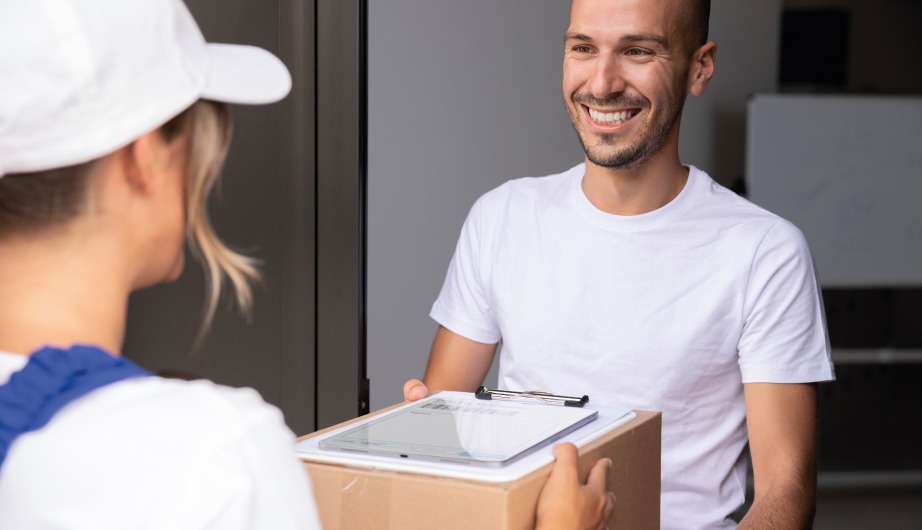
At the same time, Out Of Home models are growing as a structural alternative to home delivery. Smart lockers and pickup points in convenience stores transfer control to the consumer: the customer decides when and where to pick up their order, eliminating dependence on schedules and the friction of failed deliveries. For the retailer, the benefit is twofold: lower operating costs and greater customer satisfaction.
Latin America: when creativity compensates for infrastructure
The region faces real challenges: congested cities, unequal infrastructure between urban and rural areas, high operating costs, and informality that complicates traceability. But it also deploys solutions that developed markets, with more resources but less pressure, did not need to invent.
Integration with public transportation networks to take advantage of existing routes, hybrid platforms that combine multiple operators into a single flow, and micro-entrepreneurs in logistics who cover the last mile where large companies cannot operate profitably are responses born of necessity that in some cases surpass imported models in efficiency.
E-commerce is growing in the region at rates that test these solutions every season. Those that survive are not always the most technological, but the most adaptable. And that ability to adapt—built over decades of volatility—is perhaps the most difficult competitive advantage to replicate from the outside.
The last mile is where retail delivers on its promise to the customer. Everything that happens before—the strategy, the assortment, the price, the in-store or website experience—is validated or destroyed in those final kilometers. Mastering them is not an operational goal: it is a strategic decision.